How to Price a Restaurant Menu: A Method You Can Repeat
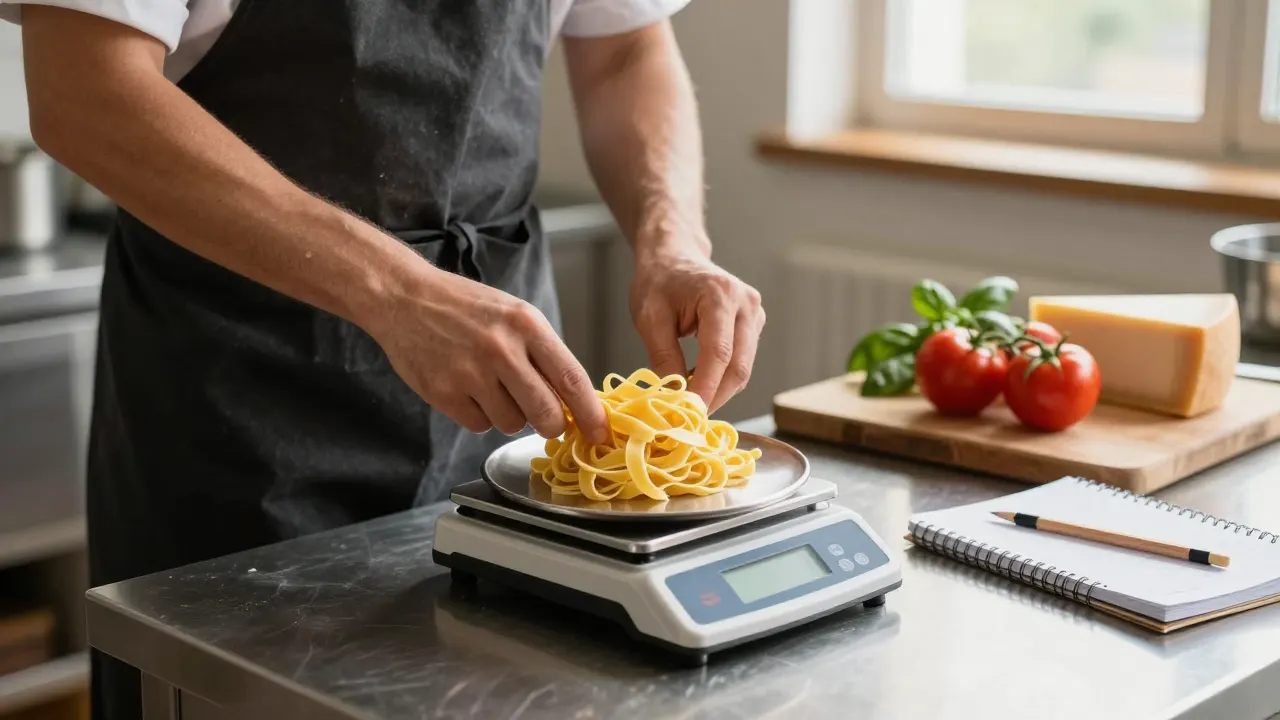
To price a menu item, add up what one plate costs you, divide it by your target food cost percentage, then check the result against similar venues. A dish that costs 4.20 to plate sells for 14.00 at a 30% target. Recalculate whenever a supplier changes its prices.
Most menus are priced by looking at the place down the street and adding a little. That tells you what guests will accept, but not whether you make money on the dish. The method below starts from your own costs and uses the market only as a check, so every price on the menu has a reason you can explain.
1. Cost every plate
Write a recipe card for each dish: every ingredient, the quantity on the plate, and what that quantity costs you. Include what is easy to forget — cooking oil, the garnish, the sauce, the bread basket that comes with it, the takeaway box if the dish travels.
Use the price you pay today, not last quarter's. Count yield too: a 1 kg piece of meat that loses a quarter of its weight in trimming and cooking gives you 750 g to sell, so each gram served costs more than the invoice suggests.
The total is the plate cost. It is the only number in this method that comes from your kitchen rather than from a guess.
2. Choose a target food cost percentage
Food cost percentage is plate cost divided by menu price. Many full-service restaurants aim for somewhere around 28–35%, but the right figure for you depends on your rent, your labour and what kind of place you run. A café selling coffee can run far lower; a steakhouse often runs higher and makes up for it on drinks.
Pick the percentage your business needs, then divide: menu price = plate cost ÷ target percentage. A dish that costs 4.20 to plate, at a 30% target, should sell for 14.00.
Do not hold every dish to the same percentage. A salad with cheap ingredients can carry a low percentage; a seafood dish that would be unsellable at 30% can run at 38% if it brings people in. What matters is the average across what you actually sell.
3. Check the price against the market
Now look at the place down the street. If your cost-based price is far above what comparable venues charge for the same dish, the recipe is the problem — the portion, the supplier or the ingredients — not the price. If it is far below, you may be leaving money on the table.
Compare like with like: the same dish, the same kind of venue, the same neighbourhood. A hotel restaurant is not a benchmark for a neighbourhood café.
4. Write the price so it reads well
Round prices consistently. A menu where one price ends in .95, another in .50 and a third in .00 reads as improvised.
In a 2009 study by researchers at Cornell's Center for Hospitality Research, guests at a restaurant spent more when menu prices were written as plain numbers (14) than when they carried a currency sign or were spelled out. It was one restaurant and one study, so treat it as a hint rather than a rule — and follow your local law, which may require the price to include taxes or be shown in a particular way.
Avoid lining prices up in a column with dotted leaders. It invites guests to scan for the cheapest dish instead of reading what each one is.
5. Review prices when costs move
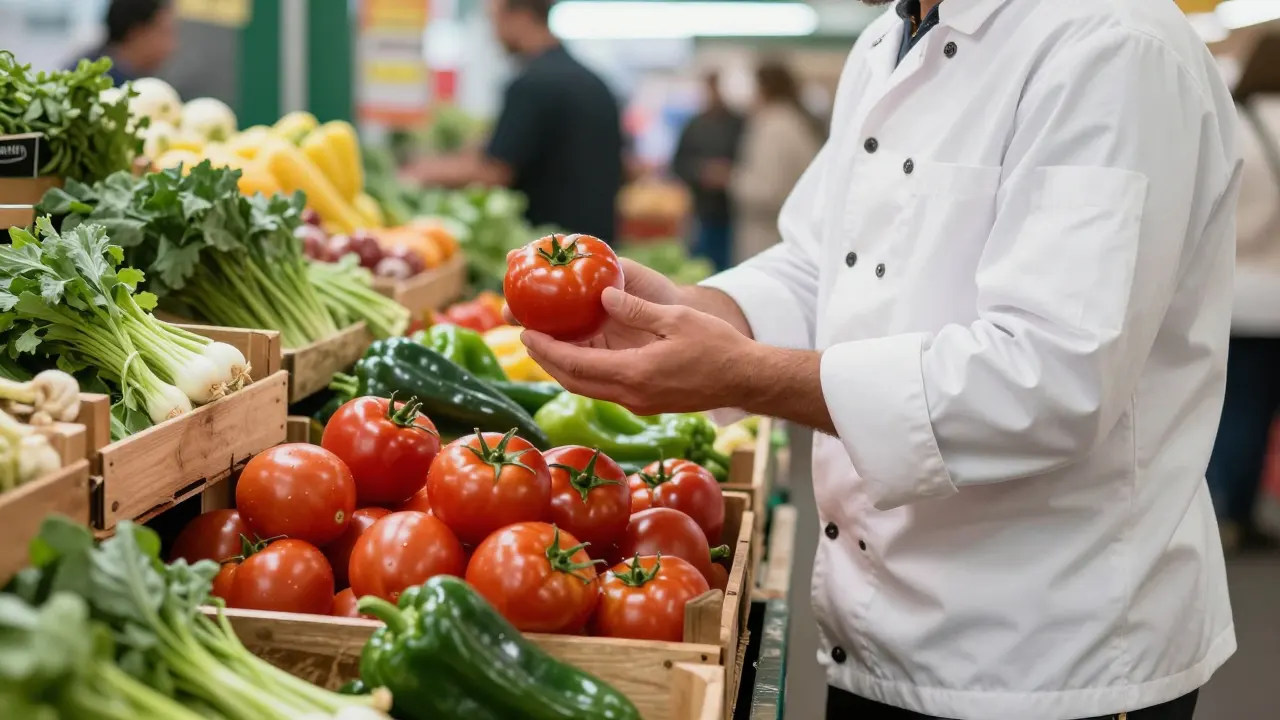
Plate costs change every time a supplier changes theirs. Keep the recipe cards in one place and recalculate when an invoice changes noticeably, not once a year.
A printed menu makes this expensive: every change means a reprint. A menu guests open from a QR code can be updated the moment you decide, and a printable menu made from the same content stays in step with it.
Once you have sales numbers, menu engineering shows which dishes earn their place and which prices to revisit first.
Frequently asked questions
What is a good food cost percentage?
There is no single right number. Many full-service restaurants aim for roughly 28–35%, but your rent, labour and concept decide what you need. Work backwards from what your business must earn.
Should every dish have the same margin?
No. Hold the average across what you sell to your target and let individual dishes vary. A dish with a high percentage can still earn well if it sells often and brings guests in.
How often should I change menu prices?
Whenever a plate cost changes noticeably. Recalculating is quick if every recipe card is up to date; the slow part is usually reprinting, which a digital menu avoids.